
Deepening scientific understanding. Connecting research. Improving organ health.
Welcome to Renal & Rheumatic Frontiers, a scientific platform that addresses the complex relationships between kidney function, rheumatic diseases, immune regulation, and chronic inflammatory processes.
Through interdisciplinary research, the exchange of scientific knowledge, and clinical perspectives, we investigate the biological mechanisms underlying kidney and rheumatic diseases. Our goal is to connect insights from molecular biology, immunology, and translational research with new perspectives on disease understanding and patient care.
Discover our mission | Explore our research areas
About us – Our mission
Kidney diseases and rheumatic diseases are often associated with interconnected biological processes, including dysregulation of the immune system, inflammation, vascular dysfunction, and tissue damage. Understanding these interactions is crucial for developing more comprehensive approaches to disease research and clinical management.
Renal & Rheumatic Frontiers promotes a multidisciplinary perspective on these diseases. It brings together scientific concepts, current research findings, and clinical knowledge to explore how different organ systems influence each other.
Our mission is to convey complex biomedical knowledge in an understandable way, promote scientific collaboration, and highlight research directions that contribute to a deeper understanding of kidney and rheumatic health.
Our Core Principles
1
Scientific Excellence
Promoting evidence-based insights and rigorous methods in biomedical research.
2
Interdisciplinary Collaboration
Linking insights from nephrology, rheumatology, immunology, molecular biology, and related fields.
3
Knowledge Exchange
Disseminating scientific developments and educational resources for researchers, students, and healthcare professionals.
4
Translational Perspectives
Investigating how laboratory results and clinical observations can support future research approaches and healthcare strategies.
Our Research Focus Areas
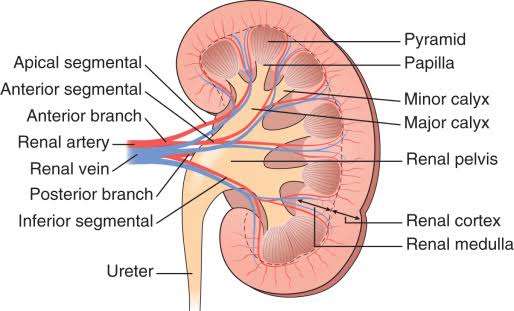
Nephrology and Kidney Biology
Explore the biological processes that maintain kidney function, regulate fluid and electrolyte balance, and contribute to systemic homeostasis.
Glomerular and tubular function
Mechanisms of chronic kidney disease
Renal inflammation and fibrosis
Biomarkers for kidney damage
Immune-mediated kidney diseases

Immunology and inflammation
Investigate how immune responses affect tissue integrity, disease progression, and interactions between the kidneys and other organs.
Cytokines and inflammatory mediators
Innate and adaptive immunity
Autoantibodies and immune complexes
Cellular signaling networks
Chronic inflammation and tissue damage
Rheumatology and joint health
Explore inflammatory and autoimmune processes affecting joints, connective tissue, and other organ systems.
Rheumatoid arthritis and systemic inflammation
Mechanisms of autoimmune diseases
Biology of joint tissue
Inflammatory signaling pathways
Systemic manifestations of rheumatic diseases


Exploring the mechanisms of complex diseases
Scientific progress requires understanding diseases at various biological levels – from molecular interactions to organ function to clinical manifestations.
Renal & Rheumatic Frontiers highlights research topics that connect fundamental biological mechanisms with the overarching challenges of kidney and rheumatic diseases.
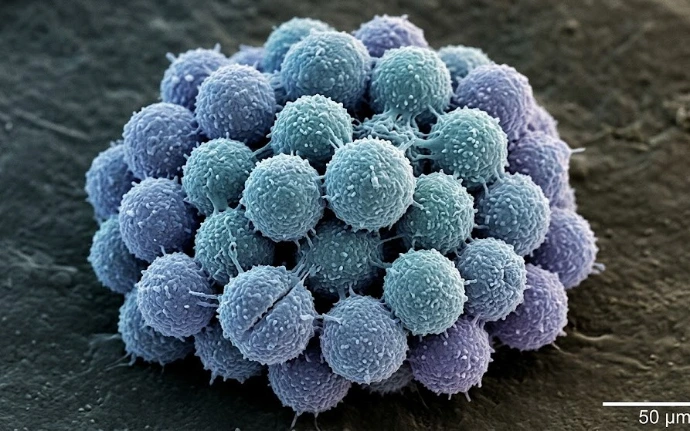
Molecular mechanisms and cellular signaling
Explore the signaling pathways involved in the activation of inflammatory processes, oxidative stress, immune regulation, cellular communication, and tissue remodeling. Understanding these mechanisms helps researchers investigate how pathological changes arise and influence the course of disease.
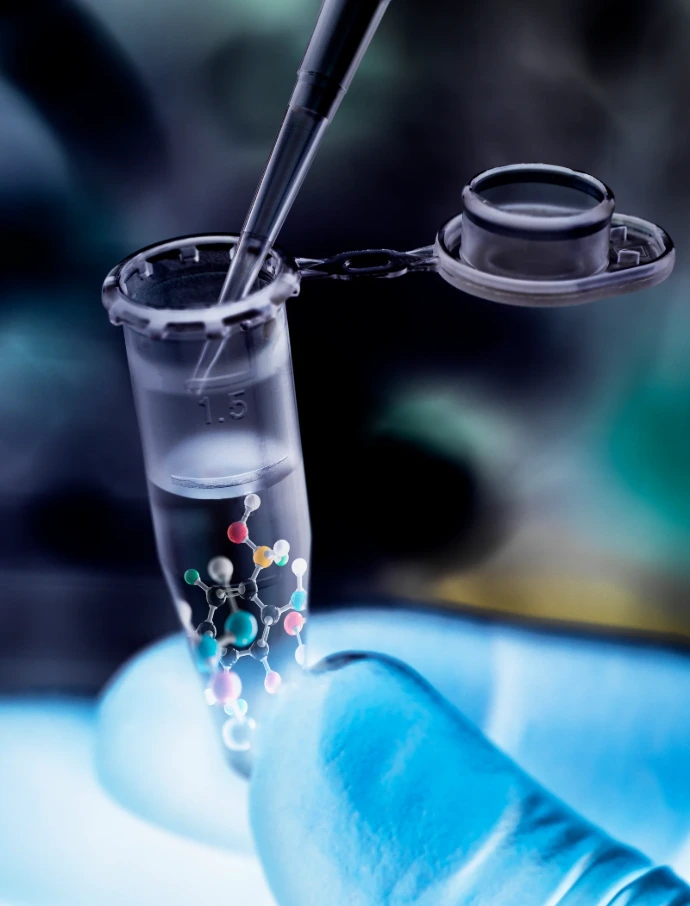
Biomarkers and disease characterization
Biomarkers can provide valuable information about biological activity, tissue damage, inflammatory processes, and potential disease progression. The exploration of molecular, cellular, and clinical biomarkers supports the development of more precise methods for studying complex diseases.

Translational and clinical research
Translational research connects laboratory discoveries with clinical questions. By integrating molecular insights, clinical observations, and patient-related data, new research directions can be identified and the heterogeneity of diseases better understood.

New research technologies
Advances in genomics, transcriptomics, proteomics, bioinformatics, and modern imaging open new possibilities for studying kidney and rheumatic diseases. These technologies enable a more detailed characterization of biological signaling pathways and help uncover relationships that may not be detectable with conventional methods.
The connection between kidney diseases and rheumatic diseases
Two fields of study connected by common biological mechanisms
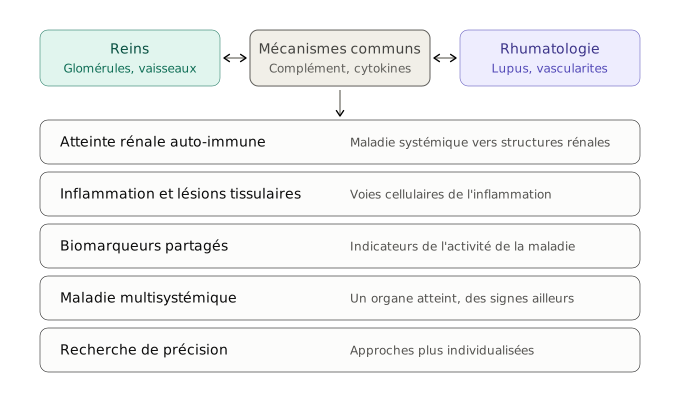
Kidney diseases and rheumatic diseases seem to affect different areas of the body, but they may share important biological mechanisms.
Systemic autoimmune diseases can affect kidney tissue, while chronic kidney dysfunction can influence the regulation of inflammatory processes and the physiological balance of the entire organism. Immune complexes, cytokines, vascular changes, and the activation of the complement system are among the mechanisms that researchers investigate in relation to these diseases.
Understanding these relationships requires collaboration among various clinical specialties and scientific disciplines.
Key research areas
Autoimmune involvement of the kidneys:Investigating how systemic immune diseases can affect the structures and functions of the kidneys.
Inflammation and tissue damage:Exploring cellular signaling pathways that contribute to persistent inflammation and organ damage.
Common biomarkers:Investigating molecular indicators that may contribute to characterizing disease activity in different conditions.
Multisystem diseases:Analyzing how pathological processes in one organ may relate to disease manifestations in other body regions.
Research focused on precision:Investigating biological differences between patients to support more individualized research approaches.
By bringing together these topics, interdisciplinary research can provide a more comprehensive picture of disease mechanisms and potential therapeutic targets.
Discovering new perspectives in kidney and rheumatology research
Scientific research continuously delivers new insights into the biological mechanisms underlying kidney diseases, autoimmune diseases, and chronic inflammatory conditions. Advances in molecular biology, computer-based data analysis, and biomedical technologies open new possibilities for more precisely studying disease processes.
Renal & Rheumatic Frontiers highlights new research directions that contribute to a more comprehensive understanding of organ health and immune regulation.
Our scientific areas of interest include:
Single-cell and molecular analyses:Investigation of cellular diversity and gene expression patterns associated with inflammatory diseases.
Profiling the immune system:Exploration of immune cell populations, inflammatory mediators, and mechanisms of immune regulation.
Advanced biomarker research:Investigation of molecular indicators that can contribute to the characterization and monitoring of diseases.
Computational biology:Integration of biological datasets to identify molecular relationships and develop new research hypotheses.
New therapeutic targets:Exploration of the scientific foundations of targeted approaches in immune-mediated and inflammatory diseases.
By linking these research perspectives, we aim to highlight the evolving scientific questions that shape the future of kidney and rheumatology medicine.

Selected scientific topics
Understanding the mechanisms of diseases
Explore selected scientific topics that connect molecular biology, immunology, and organ-specific disease processes.
The complement system in kidney diseases
Discover how the activation of the complement system contributes to immune defense and how dysregulations in certain kidney diseases may be involved in inflammatory tissue damage.
Cytokine signaling pathways in autoimmune diseases
Investigate the role of cytokines in communication between immune cells, in inflammatory responses, and in maintaining chronic inflammatory processes.
Oxidative stress and tissue damage
Understand how reactive oxygen species, antioxidant defense mechanisms, and cellular stress responses interact with inflammatory pathways and tissue integrity.
Molecular biomarkers in rheumatic diseases
Learn how molecular and cellular indicators are studied to better characterize disease activity, biological variability, and potential research applications.
Examine the mechanisms by which systemic immune system disorders affect kidney structures and can trigger organ-specific disease manifestations.

From basic research to clinical perspectives
Connecting biological discoveries with clinical questions
Understanding diseases requires more than identifying individual molecular pathways. Researchers must also investigate how experimental results relate to tissue changes, clinical observations, and individual differences among patients.
Renal & Rheumatic Frontiers highlights the relationship between basic research and clinical research, emphasizing the importance of scientific validation and interdisciplinary collaboration.
Mechanistic Research
Investigating the cellular and molecular processes involved in inflammation, immune system dysregulation, vascular damage, and organ dysfunction.
Disease Characterization
Exploring how laboratory results, molecular profiles, and clinical observations contribute to a more comprehensive understanding of disease heterogeneity.
Evidence-Based Research
Evaluating scientific findings in terms of study design, methodological limitations, reproducibility, and the existing scientific literature.
Future Research Directions
Identifying open questions and new scientific approaches that can support further investigations into kidney and rheumatic diseases.
The transition from experimental discoveries to clinical applications requires careful evaluation. Our focus is on clearly explaining this process and highlighting the scientific evidence necessary for sustainable research progress.
Why is interdisciplinary research important?
Understanding diseases from interconnected scientific perspectives
Complex diseases are rarely confined to the boundaries of a single scientific discipline. Kidney dysfunction, autoimmune activity, vascular inflammation, and tissue remodeling can interact through interconnected biological signaling pathways.
Bringing together expertise from nephrology, rheumatology, immunology, molecular biology, and computational sciences opens up the possibility of examining these relationships from complementary perspectives.
An interdisciplinary approach can help researchers identify common mechanisms, recognize knowledge gaps, and develop new questions for experimental and clinical research.
Renal & Rheumatic Frontiers promotes a broader view of biomedical science, where molecular discoveries, organ physiology, and clinical research contribute to an integrated understanding of human health.
Advancing knowledge through collaboration
Scientific progress relies on the exchange of ideas, critical evaluation of findings, and collaboration across disciplinary boundaries. By investigating the connections between immunity, inflammation, and organ function, we aim to contribute to an informed and continuously evolving scientific discourse.
Our goal is to make complex biomedical knowledge accessible and understandable while maintaining scientific accuracy, intellectual curiosity, and a consistently evidence-based perspective.
